Did You Know?
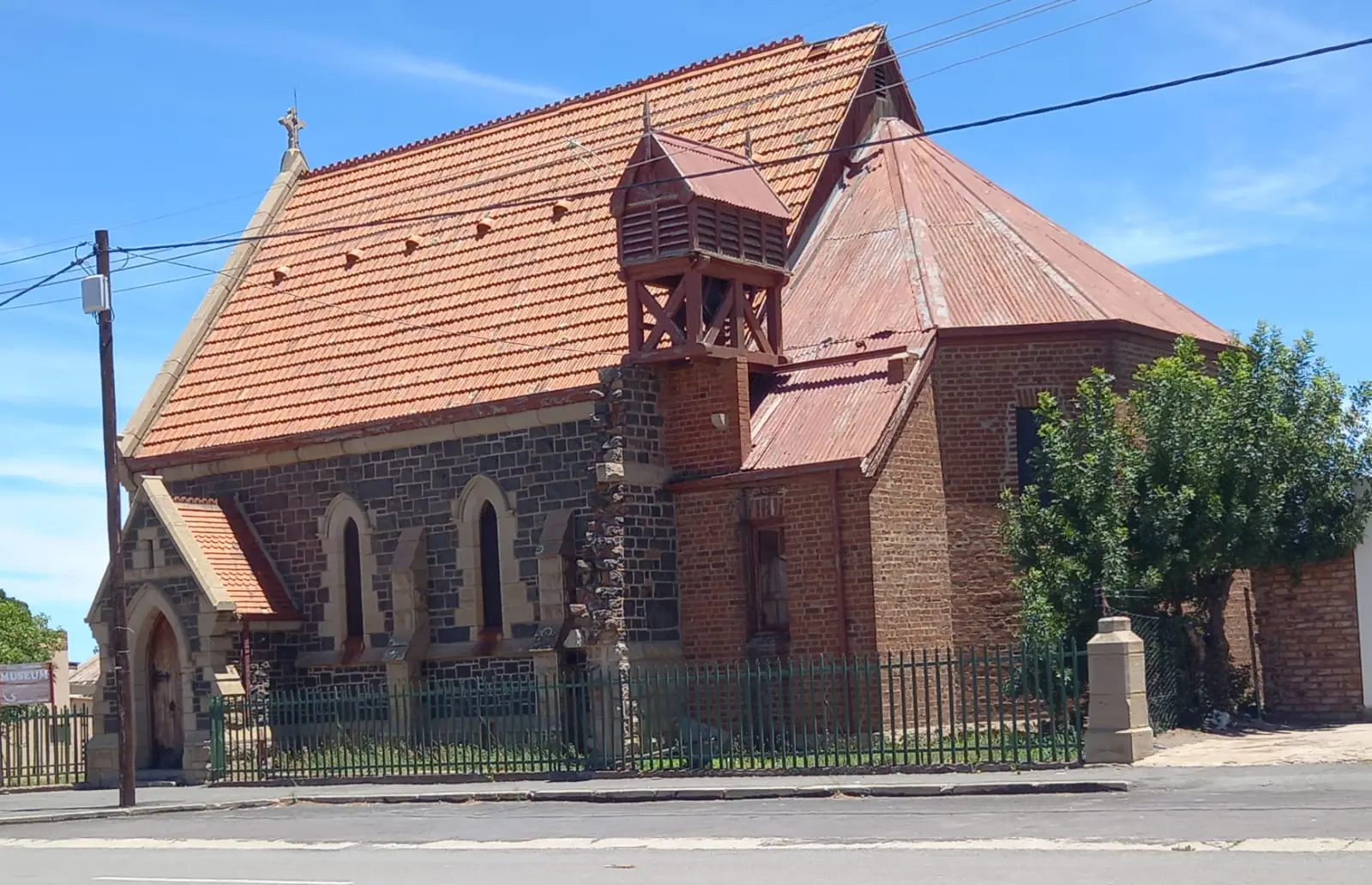
St Agnes Anglican Church in Noupoort, Northern Cape, was established in 1901, during the period of the Second Anglo-Boer War (1899–1902). Noupoort itself was founded in the 1880s as a railway junction on the Cape Government Railways line, which connected the interior to the coast. The church was built to serve the growing Anglican congregation in this small but strategically important railway town, which also became a military staging post during the war. The church building reflects typical late Victorian and early Edwardian ecclesiastical architecture common in small South African towns of that era, often constructed with local stone or brick and featuring simple Gothic revival elements. As an Anglican parish, it would have been part of the Diocese of Kimberley and Kuruman, which was established in 1911, though before that it fell under the Diocese of Bloemfontein or Cape Town depending on the period. Noupoort's history is closely tied to the railway and later to the Karoo's sheep farming economy. The church has served as a spiritual and community anchor for over a century, witnessing the town's growth, decline of rail activity in the late 20th century, and its current status as a small Karoo settlement. The building is a modest but notable example of early 20th-century church heritage in the Northern Cape, though specific architectural details or notable events associated with St Agnes are not widely documented in public records.
AI-assisted · may contain inaccuracies