Did You Know?
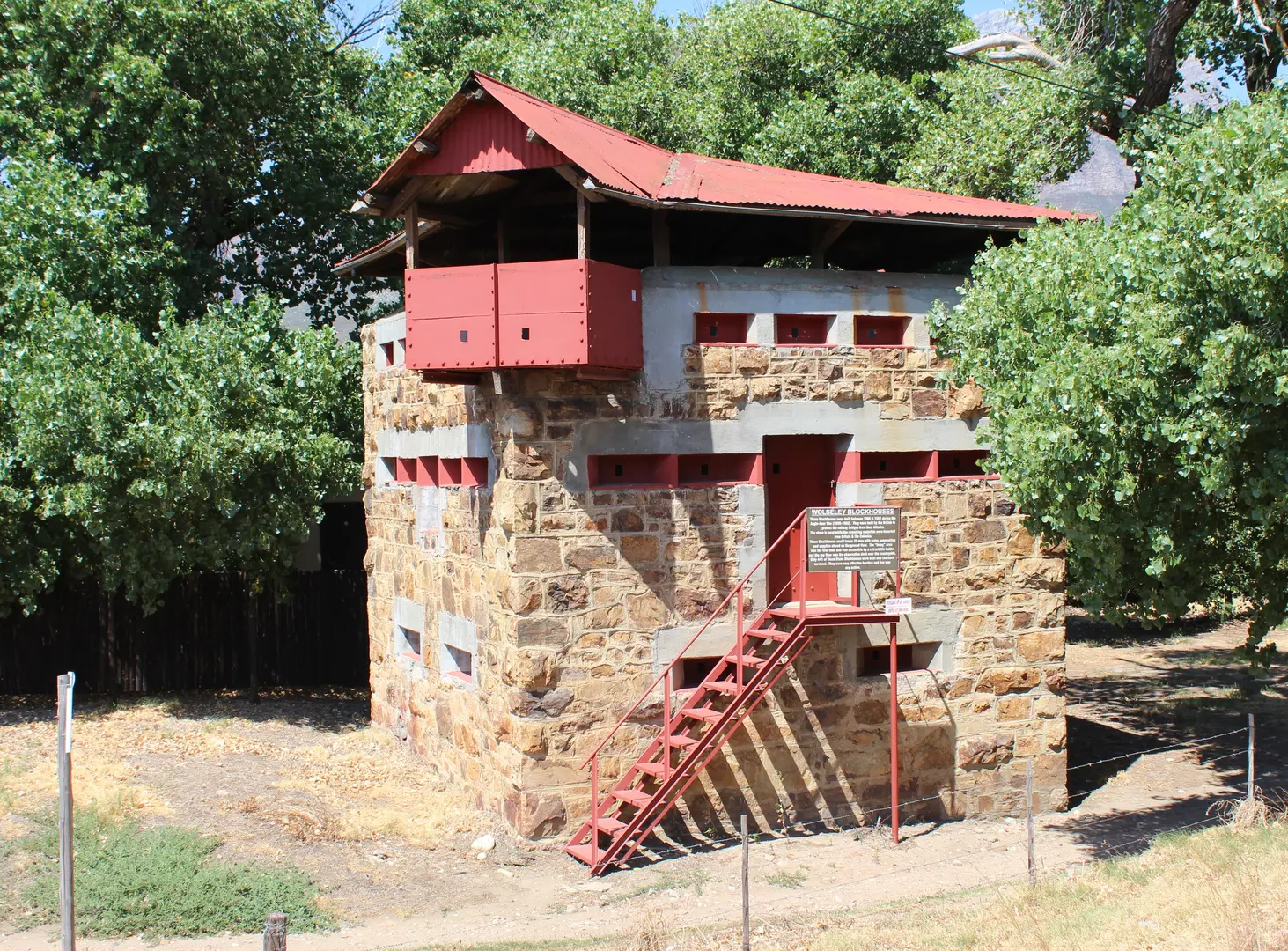
Wolseley Blockhouse No 2 is one of a series of British military blockhouses built during the Second Anglo-Boer War (1899–1902). Constructed in 1901, it formed part of the extensive network of blockhouse lines that the British army erected to protect railway lines and key passes from Boer guerrilla raids. The blockhouse at Wolseley was positioned to guard the railway route through the Tulbagh Valley, a strategic corridor linking Cape Town to the interior. These structures were typically prefabricated corrugated-iron and stone designs, with loopholed walls for rifle fire, and were manned by small garrisons of British or colonial troops. The Wolseley blockhouse is one of the few surviving examples of its type in the Western Cape, though specific operational details of this particular site are limited in public records. The town of Wolseley itself, named after Sir Garnet Wolseley, a British field marshal, developed around the railway junction in the late 19th century, and the blockhouse reflects the military importance of that infrastructure during the war. Today, the site is a heritage landmark, though it is not a major tourist attraction and is primarily of interest to military historians.
AI-assisted · may contain inaccuracies