Did You Know?
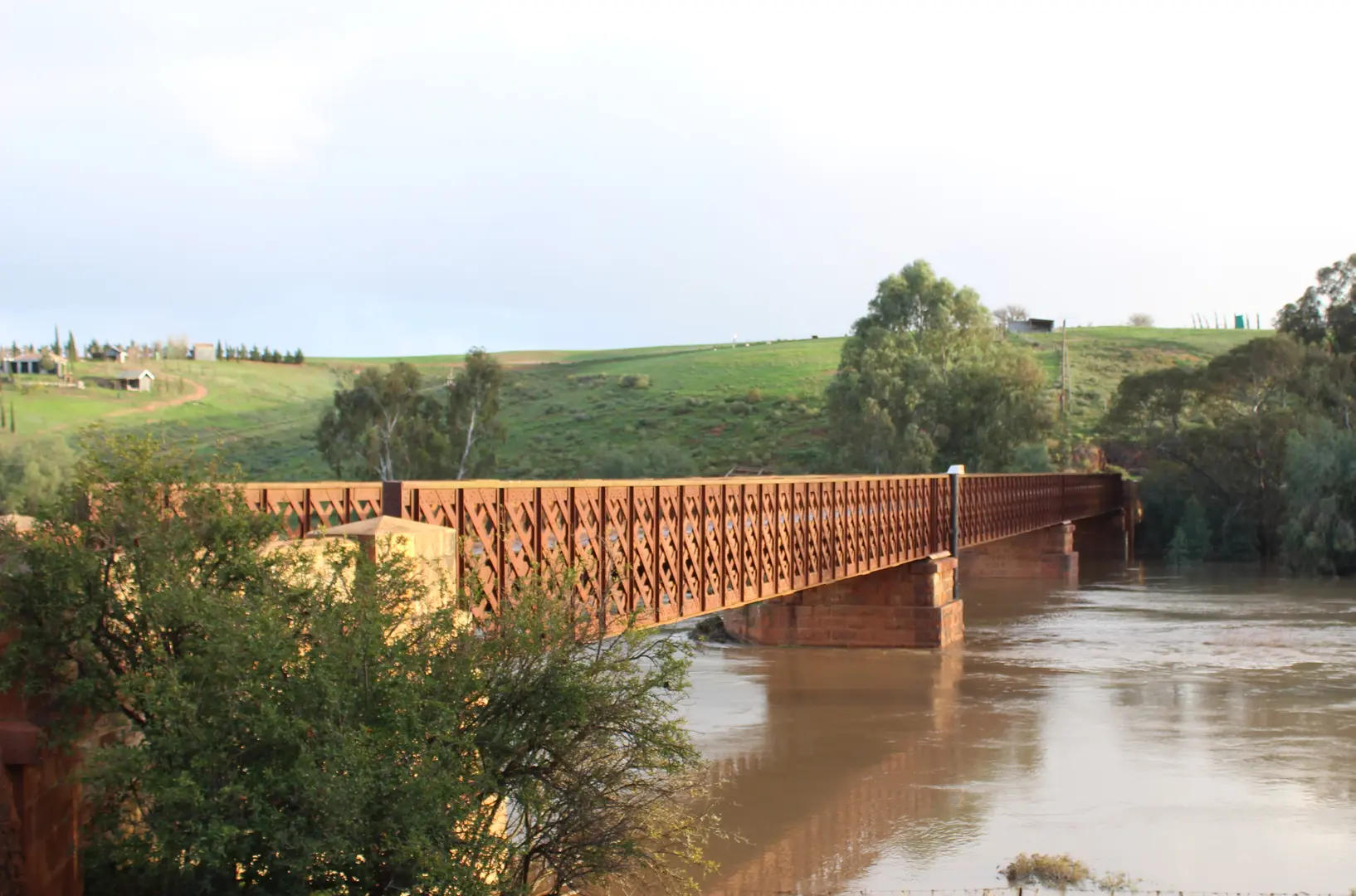
The De Brug Old Iron Bridge is located near Piketberg in the Western Cape, spanning the Berg River. It was constructed in the mid-19th century, with the year 1850 often cited as its approximate date of establishment, making it one of the earliest iron bridges in the region. The bridge served as a critical crossing point on the Berg River, facilitating transport and trade between the interior agricultural areas and the coastal settlements, particularly Cape Town. Its construction reflects the period's shift from wooden or stone drift crossings to more durable prefabricated iron structures, which were often imported from Britain and assembled on site. Contextually, Piketberg itself was established as a town in the 1830s, and the surrounding area was known for wheat farming and sheep rearing. The Berg River was a major natural barrier, especially during winter floods, so the iron bridge replaced an earlier drift or pontoon crossing, significantly improving safety and reliability for wagons and later motor vehicles. The bridge's design and materials are typical of mid-Victorian engineering, using cast and wrought iron components. While specific records of its exact builder or original engineering firm are not widely documented, its survival into the modern era makes it a notable example of early industrial heritage in the Western Cape, representing the technological advancements that shaped rural infrastructure in colonial South Africa.
AI-assisted · may contain inaccuracies