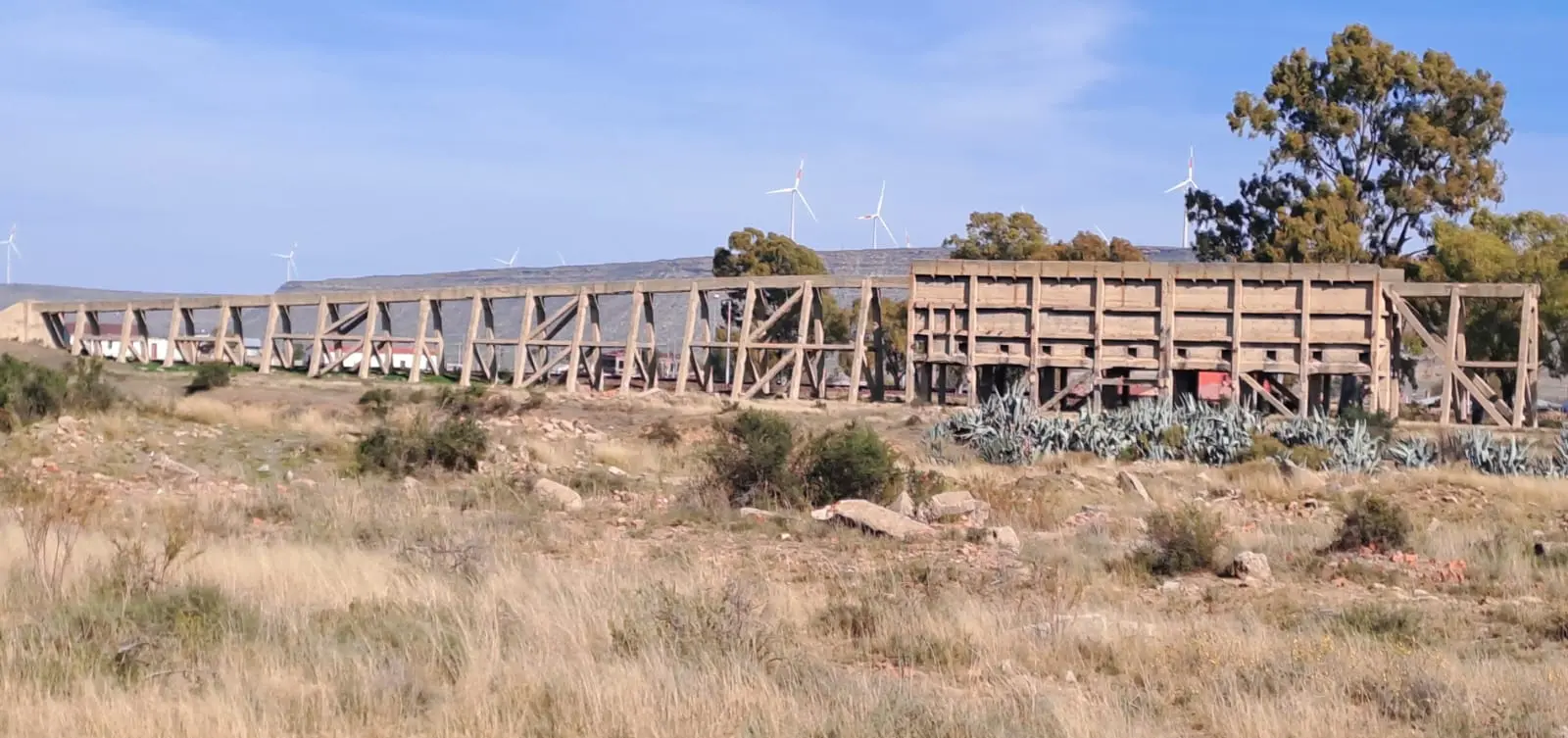
Did You Know?
The SAR and H Coaling Ash pit ramp in Noupoort, Northern Cape, was constructed in 1915 as part of the South African Railways (SAR) infrastructure. Noupoort developed as a key railway junction in the early 20th century, linking the interior to coastal ports. The ramp was specifically designed for the disposal of coal ash from steam locomotives, which were the primary mode of rail transport in South Africa until the mid-20th century. The use of reinforced concrete for such structures was innovative for its time, reflecting the durability required for heavy industrial use. Steam trains produced large quantities of ash from burning coal, and ash pits like this one were essential for maintenance. The ramp allowed workers to empty ash directly from locomotive fireboxes into disposal areas, often forming small ash dumps nearby. Noupoort's location in the Karoo region made it a critical refueling and servicing stop for trains traveling between the Cape and the interior, including the Orange Free State and Transvaal. Today, the site is a remnant of South Africa's railway heritage, though little specific documentation exists about its operational history. The town of Noupoort itself was established in the late 19th century and grew due to the railway, but declined after diesel and electric locomotives replaced steam. The ash pit ramp stands as a tangible link to the steam era, when coal-fired trains dominated the landscape.
AI-assisted · may contain inaccuracies
Activations (0)
No activations recorded for this site yet.